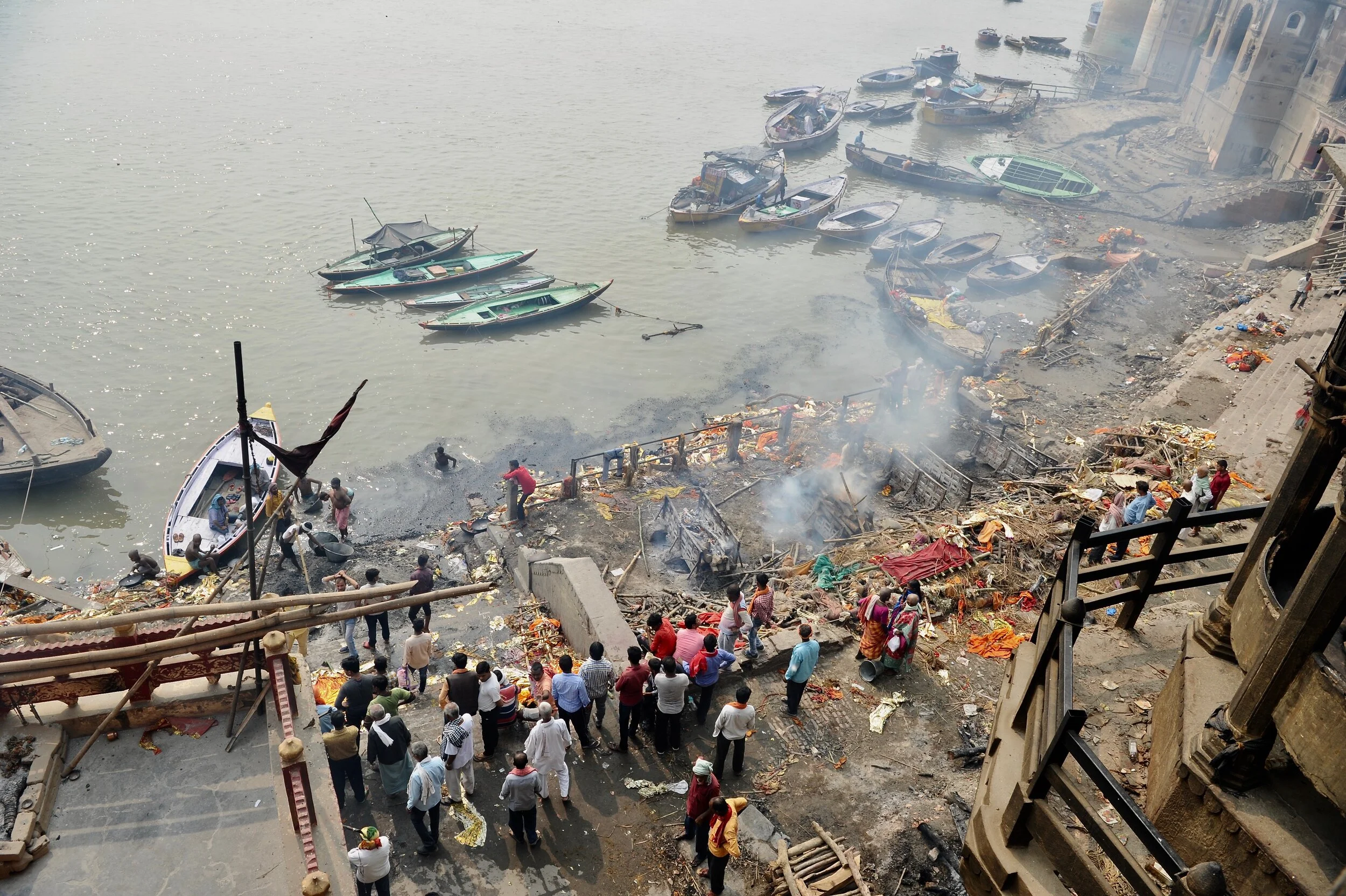
Nearly 90 sets of steps, or Ghats, leading into the Holy Ganges River dot the shores of the ancient city of Varanasi. But none are holier, and more important in Hindu rites than Manikarnika Ghat, or colloquially known as the Burning Ghat.
Nearly 90 sets of steps, or ghats, leading into the Holy Ganges River dot the shores of the ancient city of Varanasi. But none are holier, and more important in Hindu rites than Manikarnika Ghat, or colloquially known as the Burning Ghat. These are the cremation grounds where Hindus believe that their souls will rest in perpetual peace upon their earthly demise, end the cycle of rebirth, and allow the soul to reach nirvana.
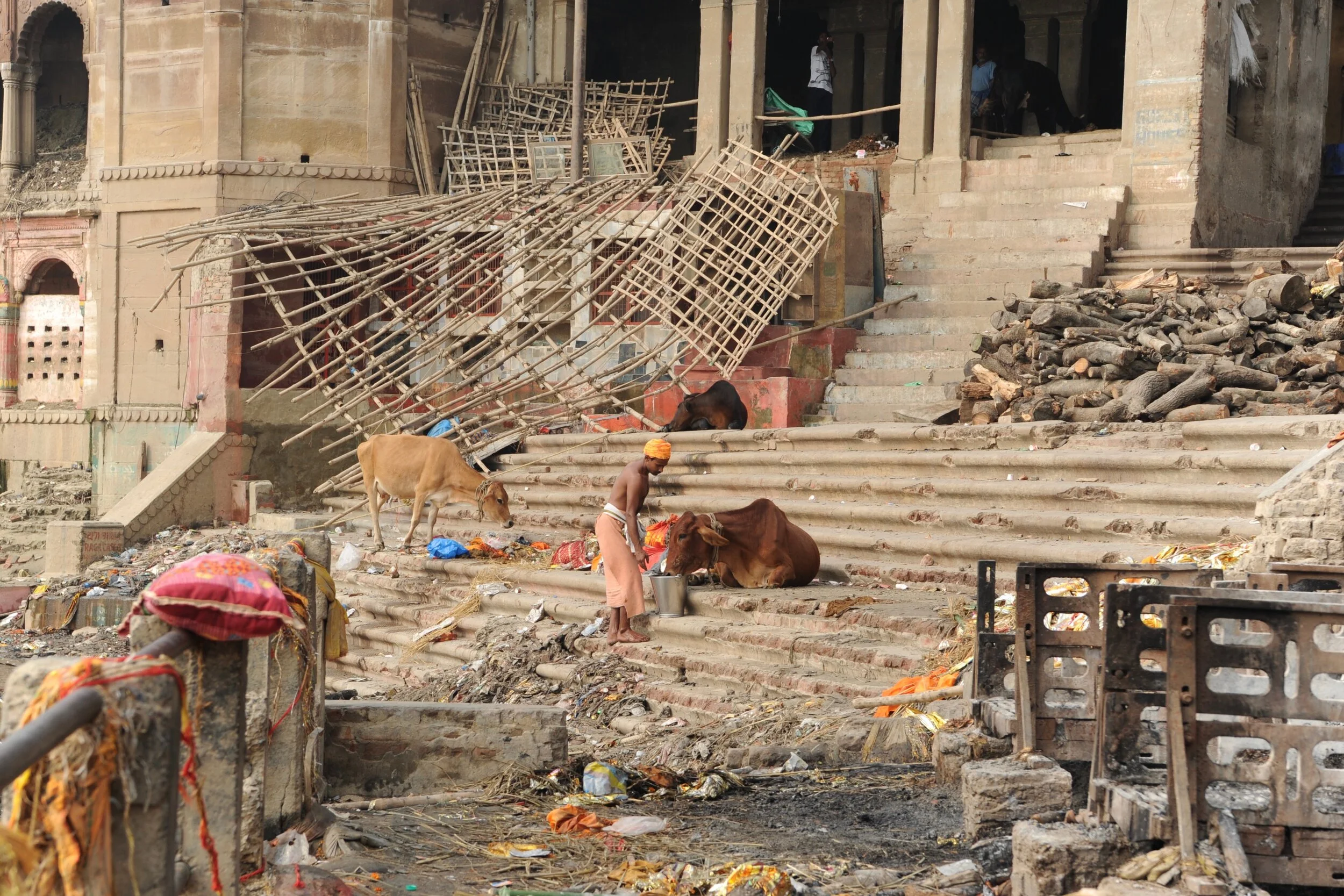
The reality of these holy grounds is austere, dark, eerie, and almost Faustian, with symmetrically arranged piles of logs in key locations around the Ghat and stalls open for business offering services associated with the cremation process. This is a 24/7 operation, cremating the bodies of over 100 people a day.
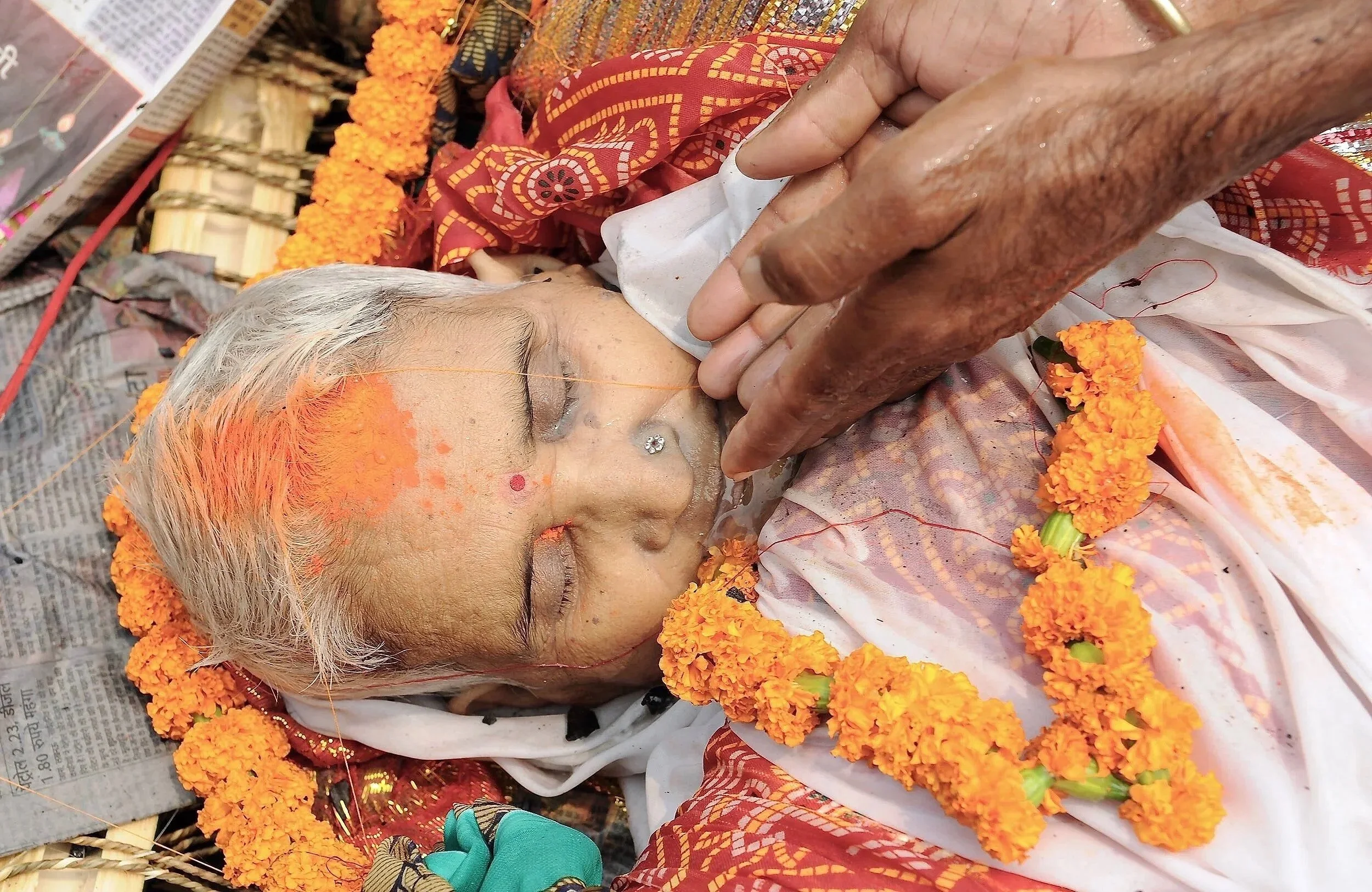
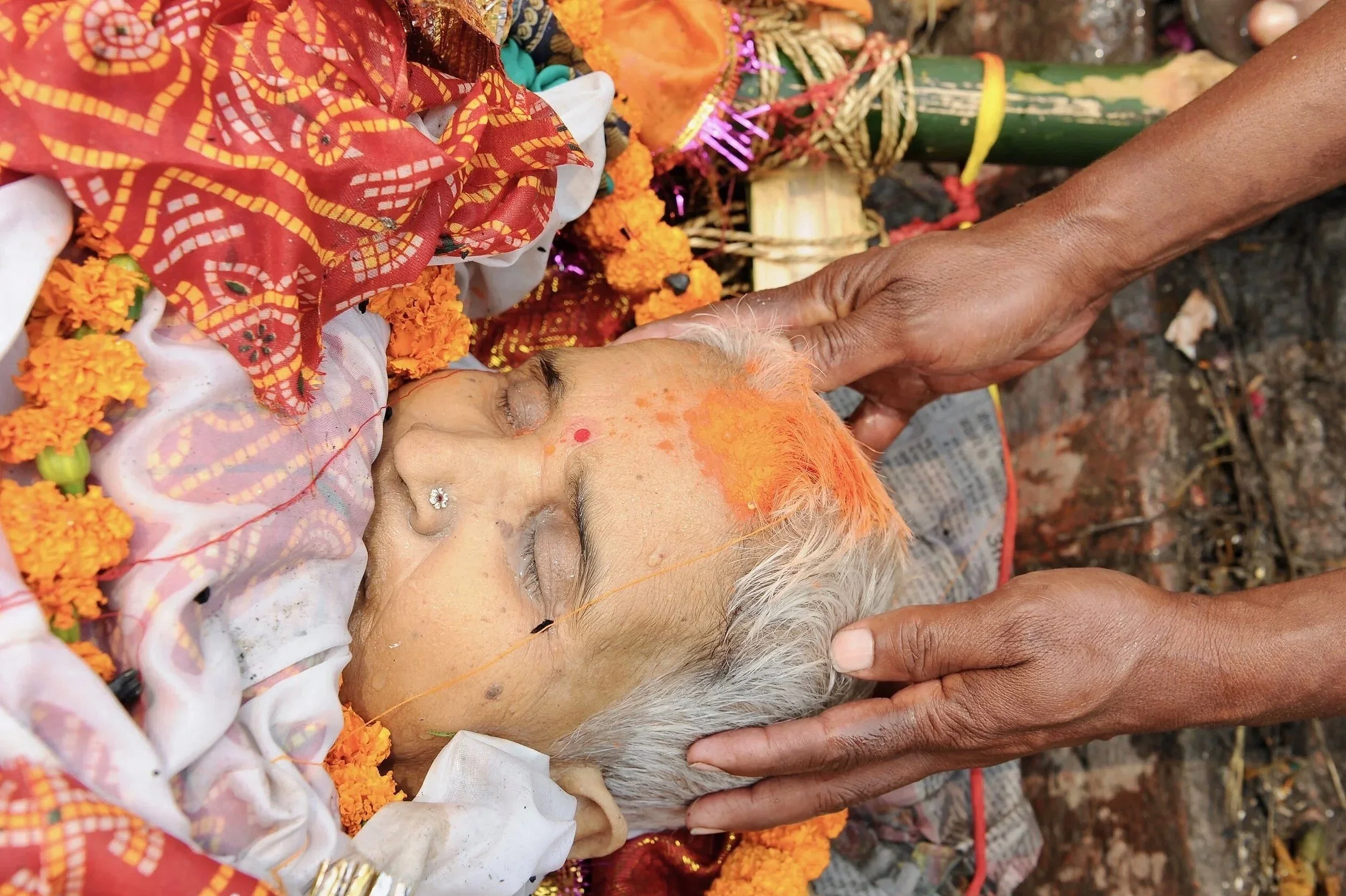
As dark, and creepy as it may seem to many from the West, there is a strange sense of energy in the Manikarnika Ghat. The bodies are brought to the burning grounds shrouded in colorful silks, and flowers, a strong contrast to the dark surroundings. The ceremony is strictly performed by men only. No women, not even family members, are allowed and photography is strictly taboo.
©Nadezda Tavodova Tezgor